How Businesses Use AI Images to Scale Marketing Content
AI image generation is no longer just a creative novelty.
For many businesses, it has become a production tool.
From startups to agencies to ecommerce brands, companies are using AI-generated visuals to increase output, reduce costs, and move faster than traditional workflows allow.
This article breaks down how businesses are integrating AI images into real marketing pipelines.
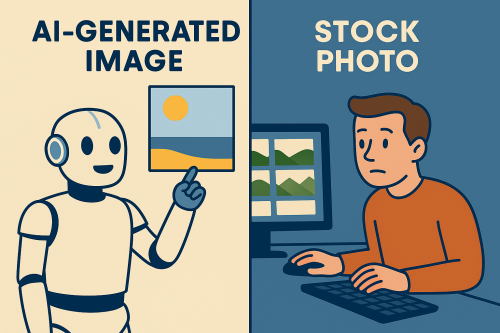
1. Replacing Stock Photos with Custom Visuals
Stock photography has limitations:
-
Overused imagery
-
Licensing constraints
-
Limited stylistic control
-
Generic representation
AI changes that.
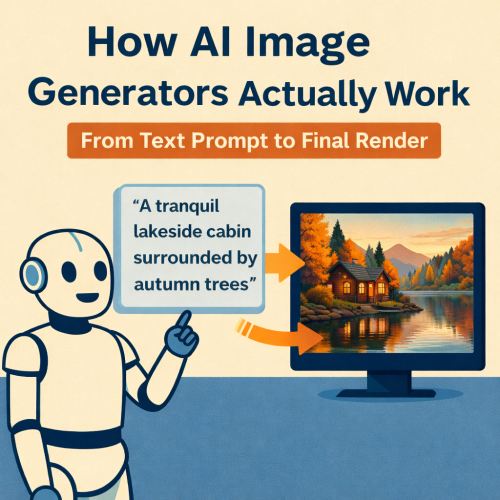
Instead of searching through libraries, businesses generate:
-
Brand-aligned hero images
-
Niche-specific lifestyle scenes
-
On-demand product environments
-
Custom social media visuals
The result: originality without a photoshoot budget.
2. Accelerating Social Media Content Production
Modern brands need:
-
Instagram posts
-
LinkedIn banners
-
Pinterest visuals
-
Ad creatives
-
Story thumbnails
AI allows marketing teams to:
-
Generate multiple variations instantly
-
Test different color schemes
-
Experiment with composition
-
Produce platform-specific aspect ratios
Instead of waiting days for design revisions, iteration happens in minutes.
3. Product Mockups Without Studio Photography
Ecommerce brands are using AI to generate:
-
Lifestyle product placements
-
Contextual environments
-
Packaging concepts
-
Early-stage prototypes
Example workflow:
-
Upload product image (or describe it).
-
Generate realistic background environments.
-
Produce multiple scene variations.
This reduces dependency on:
-
Studio rentals
-
Photography teams
-
Physical sample production
4. Rapid A/B Testing for Ad Campaigns
Performance marketing depends on testing.
AI enables:
-
Multiple creative angles
-
Different emotional tones
-
Alternative lighting styles
-
Demographic-targeted variations
Instead of producing 2–3 creatives, teams can test 20+ variations at low marginal cost.
More variants = better data = higher conversion probability.
5. Building Visual Brand Identity at Scale
Consistency is critical in branding.
AI tools help businesses:
-
Maintain color palette discipline
-
Reinforce recurring themes
-
Develop recognizable visual motifs
-
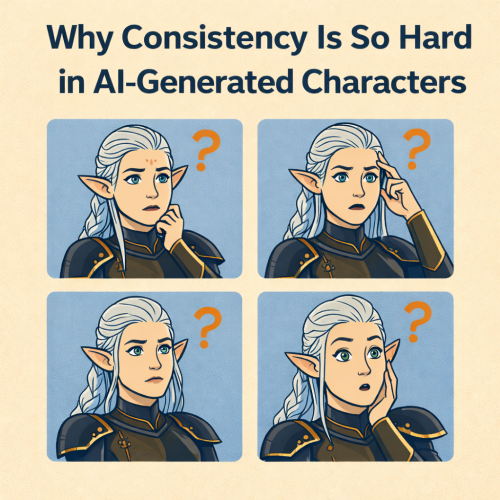
Create consistent character mascots
With structured prompts, teams can systematize brand visuals rather than rely on scattered creative direction.
6. Supporting Content Marketing & SEO
Blog posts require:
-
Feature images
-
Infographics
-
Conceptual illustrations
-
Custom diagrams
AI-generated visuals increase:
-
Time on page
-
Shareability
-
Visual engagement
And unlike stock imagery, visuals can be tailored precisely to article themes.
7. Reducing Production Costs
Traditional visual production may involve:
-
Designers
-
Photographers
-
Editors
-
Licensing fees
AI reduces cost per asset dramatically, especially for:
-
Startups
-
Small agencies
-
Solopreneurs
It does not eliminate designers - but it enhances output efficiency.
8. From Creative Bottleneck to Creative Flow
In many organizations, visual production is a bottleneck.
Requests stack up. Approvals delay execution. Campaign timelines stretch.
AI transforms visual generation into an on-demand process.
Marketing teams can:
-
Prototype ideas instantly
-
Visualize concepts before approval
-
Move from concept to publish-ready asset in hours
Speed becomes a competitive advantage.